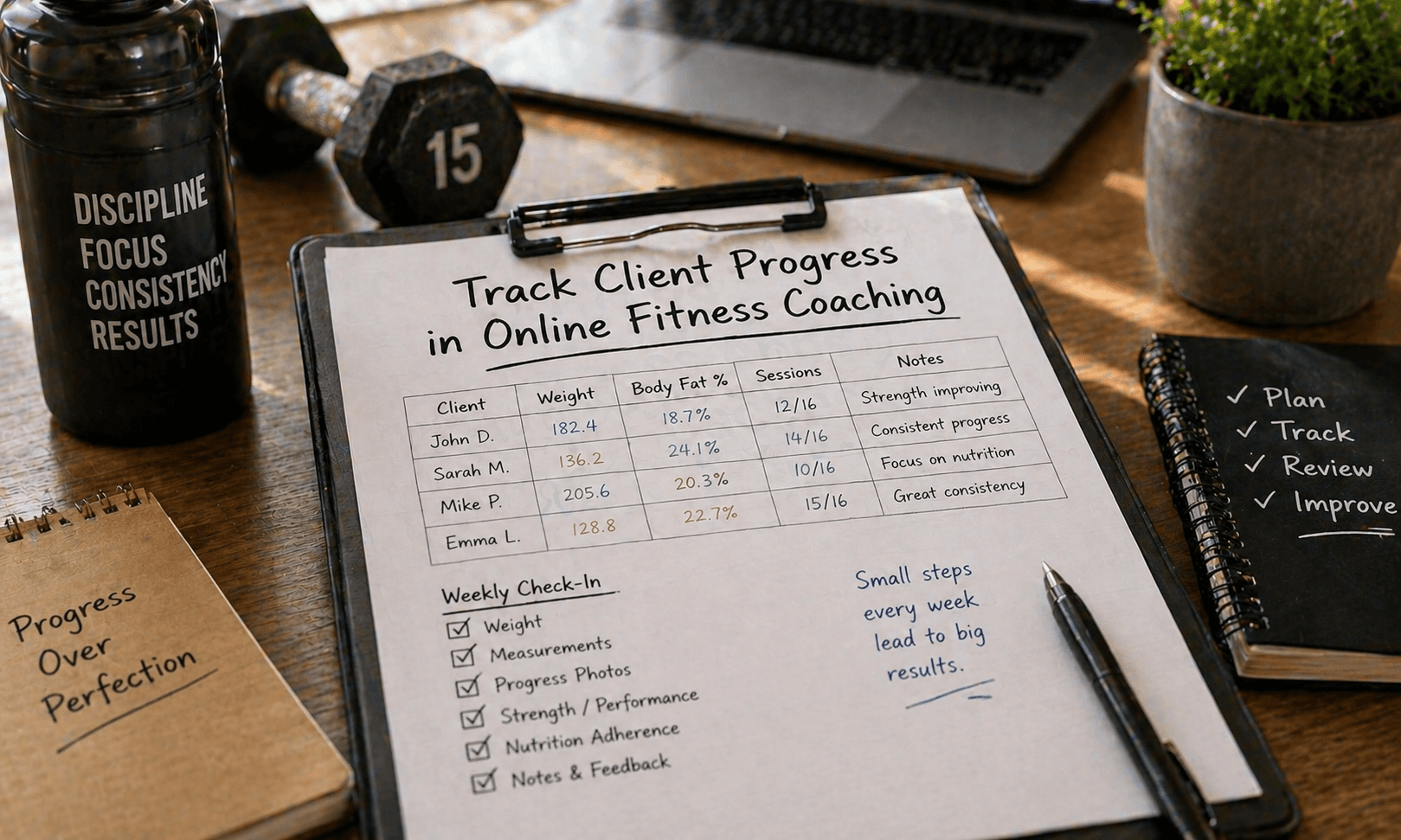

Track Client Progress in Online Fitness Coaching
Tracking progress is where coaching becomes real. Workouts and plans do not matter if you cannot see what is changing. Most coaches track something. Very few track it in a way that helps them make decisions. Good tracking is simple, repeatable, and easy to review.
The Real Problem with Progress Tracking
The issue is not effort. It is inconsistent.
Clients update data at random times.
Metrics change week to week.
No fixed format for check-ins.
Data exists but is unusable.
Progress feels unclear despite effort.
This leads to confusion for both coach and client.
What You Should Track (And Ignore)
Tracking everything creates noise. Tracking the right things creates clarity. Focus on these:
Body weight tracked on the same day, weekly.
Body measurements taken under the same conditions.
Strength numbers tracked per key lifts.
Habit completion is tracked as a simple yes-or-no.
Progress photos taken with the same setup.
Ignore anything that does not change decisions.
Build a Fixed Tracking Format
Progress improves when tracking stays predictable.
The same questions are asked every week.
Same format used for every client.
Same timing for all check-ins.
Same metrics tracked each cycle.
Same structure for reviewing data.
This removes confusion and makes comparison easy.
Tracking Client Progress Using a CRM
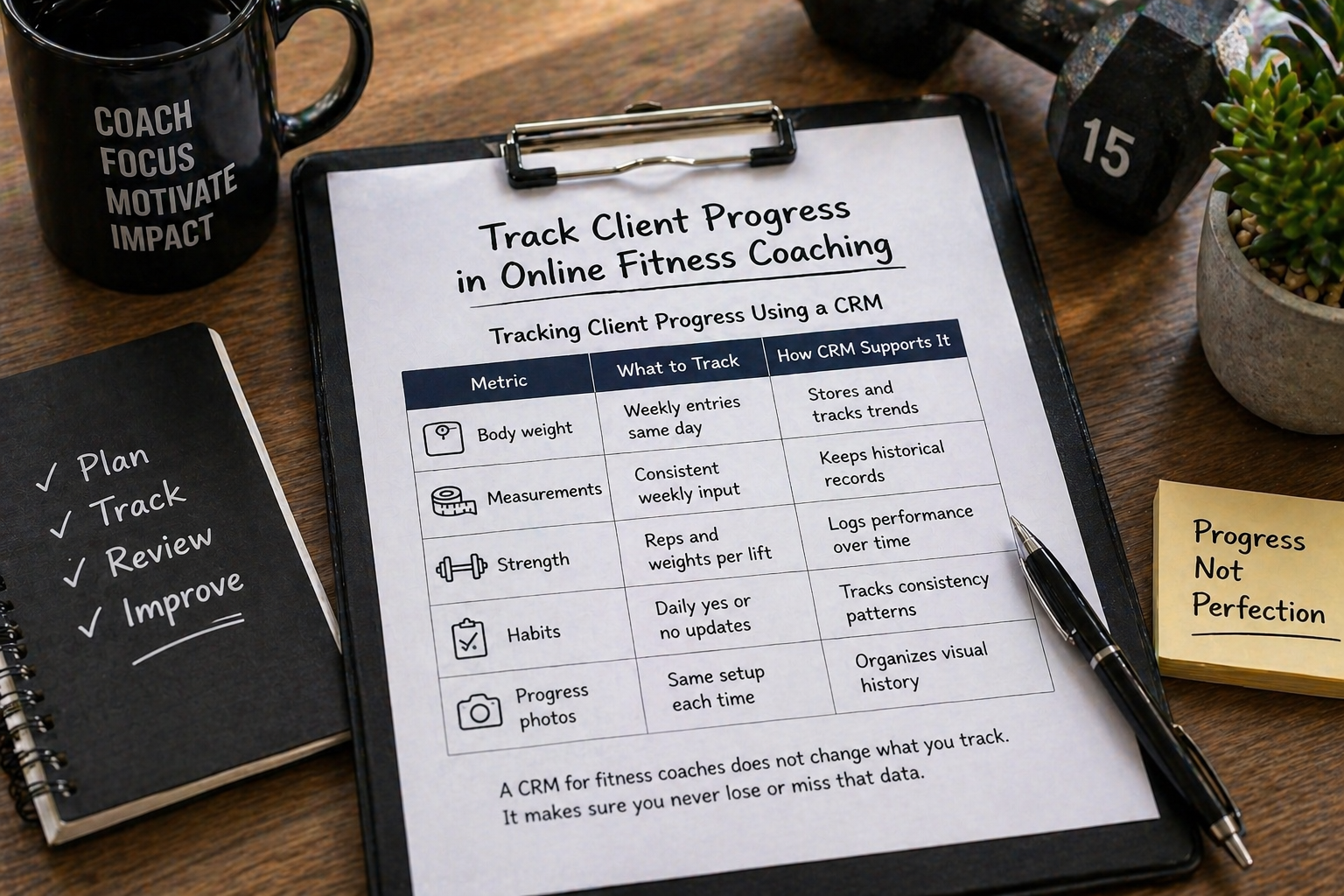
Metric | What to Track | How CRM Supports It |
Body weight | Weekly entries same day | Stores and tracks trends |
Measurements | Consistent weekly input | Keeps historical records |
Strength | Reps and weights per lift | Logs performance over time |
Habits | Daily yes or no updates | Tracks consistency patterns |
Progress photos | Same setup each time | Organizes visual history |
A CRM for fitness coaches does not change what you track. It makes sure you never lose or miss that data.
How to Read Progress Correctly
Most mistakes happen during interpretation.
Look at trends, not single data points.
Ignore short-term fluctuations in weight.
Compare current data with the starting baseline.
Focus on consistency before intensity.
Adjust only when patterns stay consistent.
This keeps decisions stable and logical.
Make Tracking Easy for Clients
If tracking feels like work, clients stop doing it.
Use simple forms with clear questions.
Limit updates to essential metrics only.
Keep check-ins short and structured.
Set one fixed day for updates.
Respond quickly to submitted data.
The easier it is, the more consistent it becomes.
Where Tools Like CRM Fit
Tracking does not depend on tools, but tools can support consistency. A CRM for fitness coaches can help:
Store progress history in one place.
Keep check-ins organised per client.
Link communication with progress updates.
Make past data easy to access.
Reduce manual tracking effort.
But the structure always matters more than the tool.
Track fewer things, track them consistently, and your decisions will start making more sense.
Frequently Asked Questions
What is the best way to track fitness progress online?
Use a fixed weekly structure with consistent metrics, and compare results over time rather than relying on daily changes.
How often should I track client progress?
Weekly tracking works best, with monthly reviews for bigger changes and overall direction.
Can too much tracking slow results?
Yes. Too many metrics create confusion. Tracking should support decisions, not complicate them.
Do I need software for tracking progress?
Not necessarily, but a CRM for fitness coaches can help organise and store data as your client base grows.
Related Posts
Manage Fitness Plans for Multiple Clients Efficiently
Learn how to create and manage customized fitness plans for multiple clients using simple systems, tools, and CRM workflows that save time and improve results.

Build a Referral System for Fitness Coaches
Create a referral system for fitness coaching that drives consistent client growth through structured asks, simple rewards, and clear tracking without guesswork