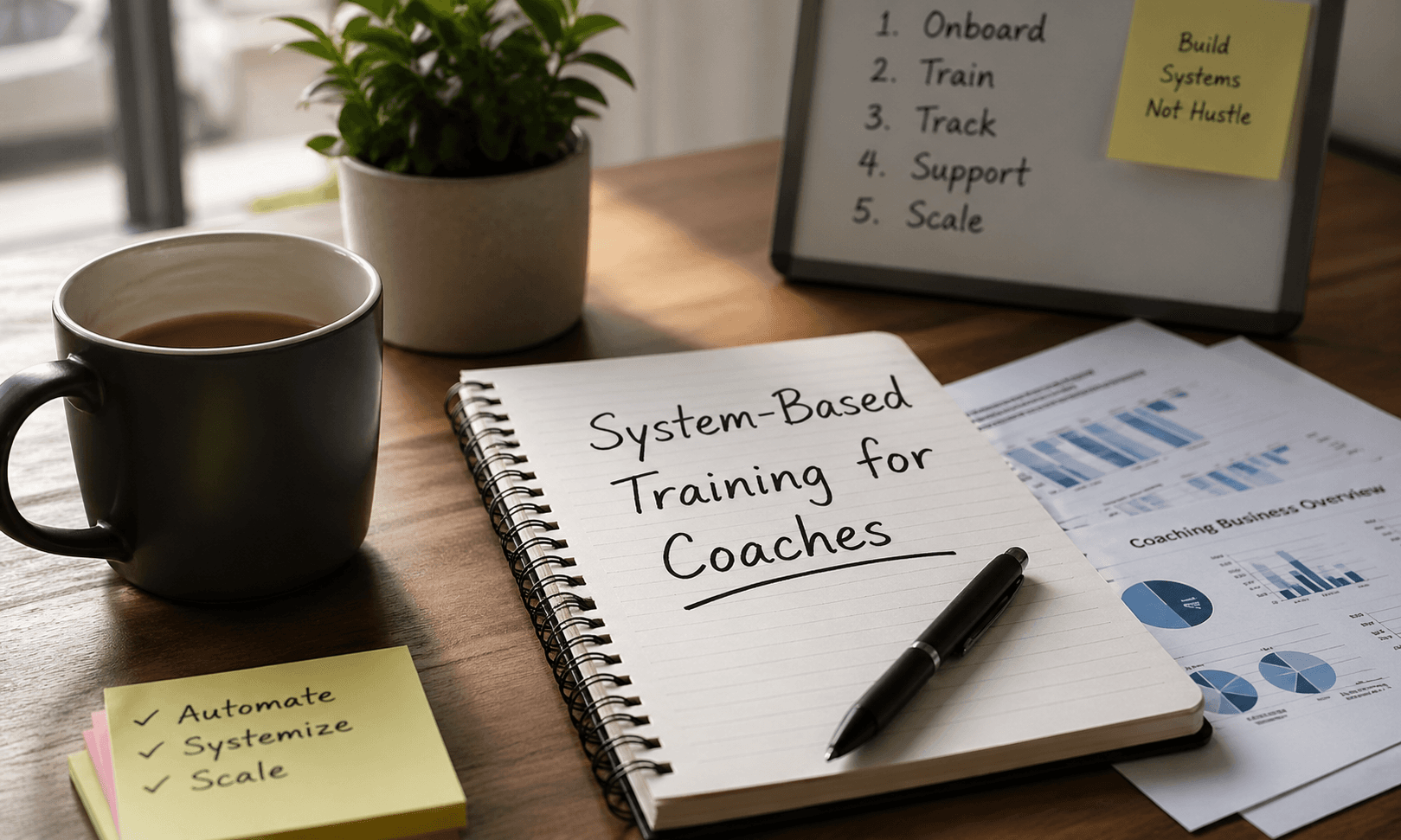

System-Based Training for Coaches | Scale Fitness Business
Personal training used to depend on one thing: your time. If you stopped working, revenue stopped too. That model breaks fast once you grow. More clients mean longer hours, scattered data, missed follow-ups, and slow progress tracking. This is where system-based training steps in. System-based training is not about replacing coaching. It is about structuring it so results remain consistent without you having to do everything manually.
What Personal Training Looks Like Today
Most coaches start here:
Client data is stored across multiple places.
Workout plans are created manually every time.
Progress tracked through chats or memory.
Follow-ups depend on daily availability.
Payments and reports are handled manually.
This works with a few clients. It fails with 20 or more.
What Changes with System-Based Training
System-based training brings structure into your coaching business.
Centralised client data and communication.
Automated workout and nutrition plans.
Scheduled check-ins and reminders.
Clear progress tracking dashboards.
Repeatable systems for onboarding clients.
This is where tools like a CRM for fitness coaches become useful. You stop guessing and start managing everything from one place.
Side-by-Side Comparison
The difference becomes clear once you look at how daily operations are handled in both approaches.
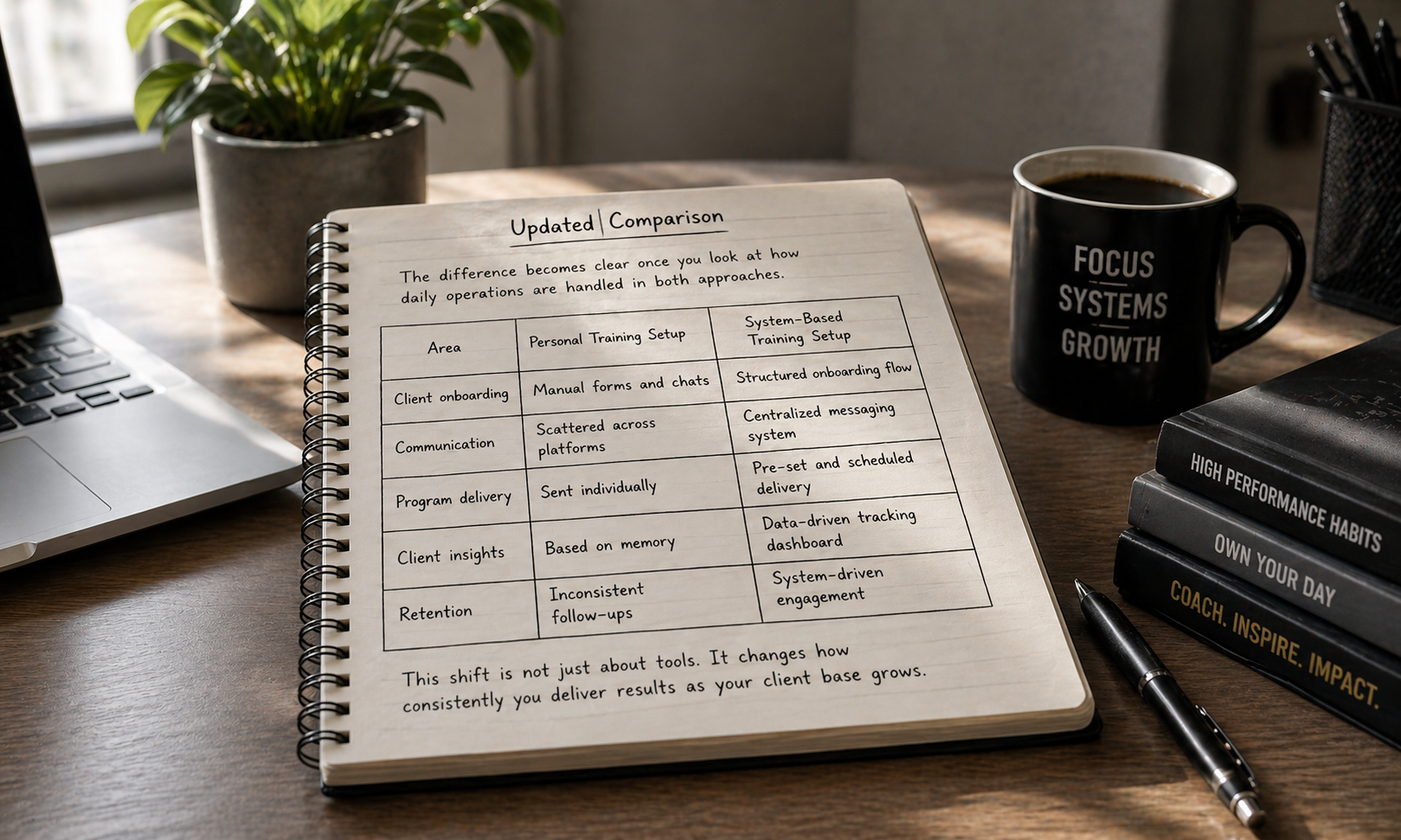
Area | Personal Training Setup | System-Based Training Setup |
Client onboarding | Manual forms and chats | Structured onboarding flow |
Communication | Scattered across platforms | Centralised messaging system |
Program delivery | Sent individually | Pre-set and scheduled delivery |
Client insights | Based on memory | Data-driven tracking dashboard |
Retention | Inconsistent follow-ups | System-driven engagement |
This shift is not just about tools. It changes how consistently you deliver results as your client base grows.
Why Coaches Are Making This Shift
The shift is not about trends. It is about survival in a competitive market. Coaches who rely only on manual work struggle to keep up with:
Increasing client expectations.
Faster response times are needed.
Demand for Personalised programs.
Need for visible progress tracking.
Managing multiple clients at once.
A CRM for fitness coaches helps manage these without adding more workload.
How a CRM Changes Coaching Operations
A CRM for fitness coaches acts as your control centre. Instead of juggling apps, chats, and spreadsheets, everything moves into one system.
Client onboarding becomes structured.
Progress tracking becomes visual.
Communication stays organised.
Follow-ups happen automatically.
Reports are generated without manual effort.
This shift allows you to focus on coaching rather than admin work.
Real Example
A fitness coach handling 15 clients manually spends:
2–3 hours daily on follow-ups.
1–2 hours updating plans.
Time lost searching for client data.
After switching to a CRM for fitness coaches:
Follow-ups are automated.
Plans are reused and adjusted faster.
Client data is accessible instantly.
The result is more time for strategy and better client results.
When Should You Shift to System-Based Training
You do not need to wait until you feel overwhelmed. The signs are clear:
You forget client updates or messages.
You repeat the same tasks daily.
You struggle to track progress clearly.
You feel stuck with client capacity.
Your income depends only on the hours you work.
At this stage, moving to a structured system makes sense.
Build systems early, so your coaching stays consistent as your client base grows.
Frequently Asked Questions
How do fitness coaches scale without hiring more trainers?
They build structured systems for onboarding, programming, and follow-ups. A CRM for fitness coaches helps manage more clients without increasing workload.
What is the biggest problem with manual coaching systems?
The main issue is inconsistency. Clients receive delayed responses, progress tracking becomes unclear, and important updates are often missed.
Can system-based training improve client results?
Yes. When plans, tracking, and check-ins are structured, clients stay more consistent and engaged, which leads to better outcomes over time.
Is it expensive to switch to system-based coaching?
Not really. Most tools are affordable compared to the time lost in manual work. A CRM for fitness coaches often pays off quickly.
How does system-based training help with client retention?
Consistent communication, timely follow-ups, and visible progress tracking make clients feel supported, which increases long-term retention.
Related Posts
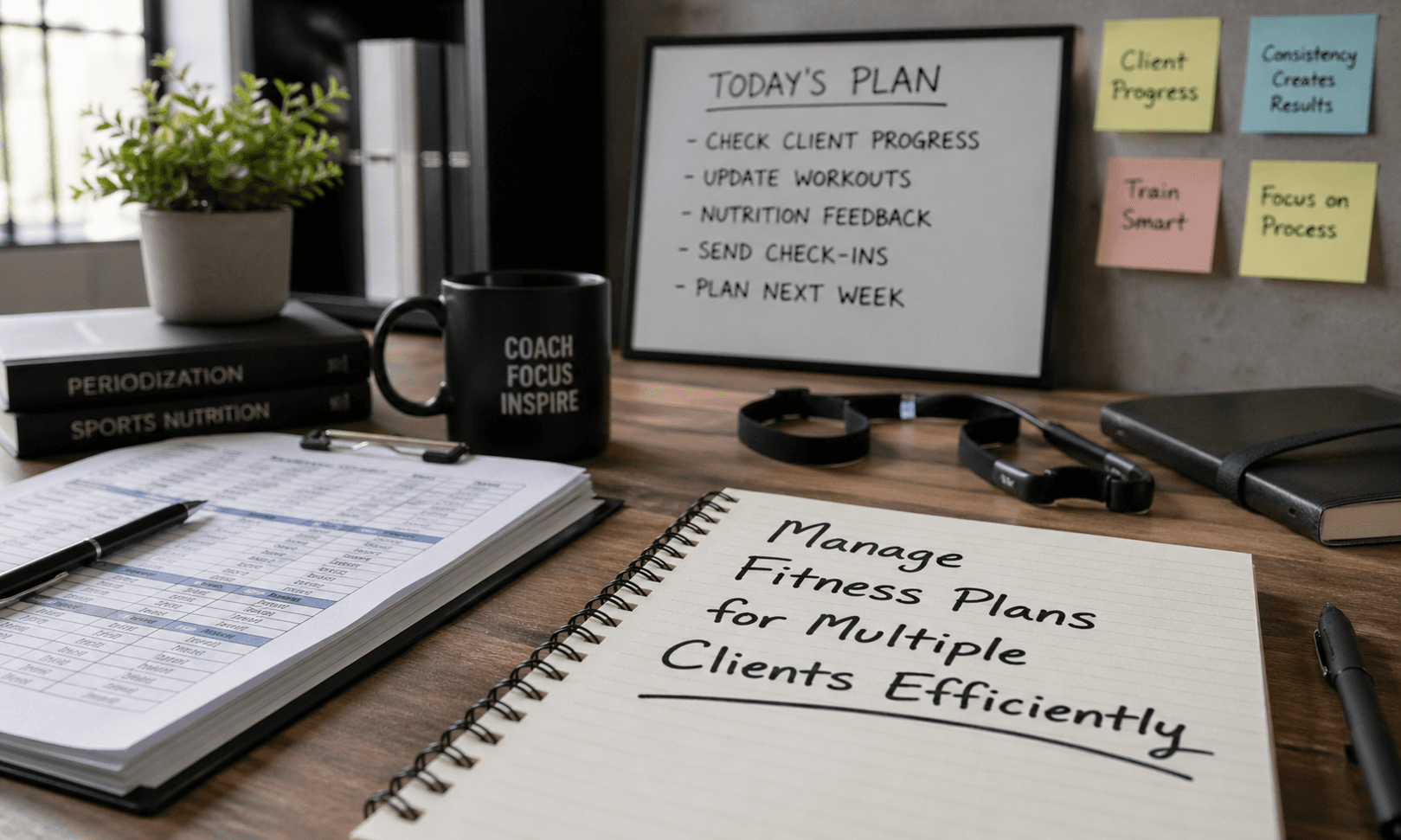
Manage Fitness Plans for Multiple Clients Efficiently
Learn how to create and manage customized fitness plans for multiple clients using simple systems, tools, and CRM workflows that save time and improve results.
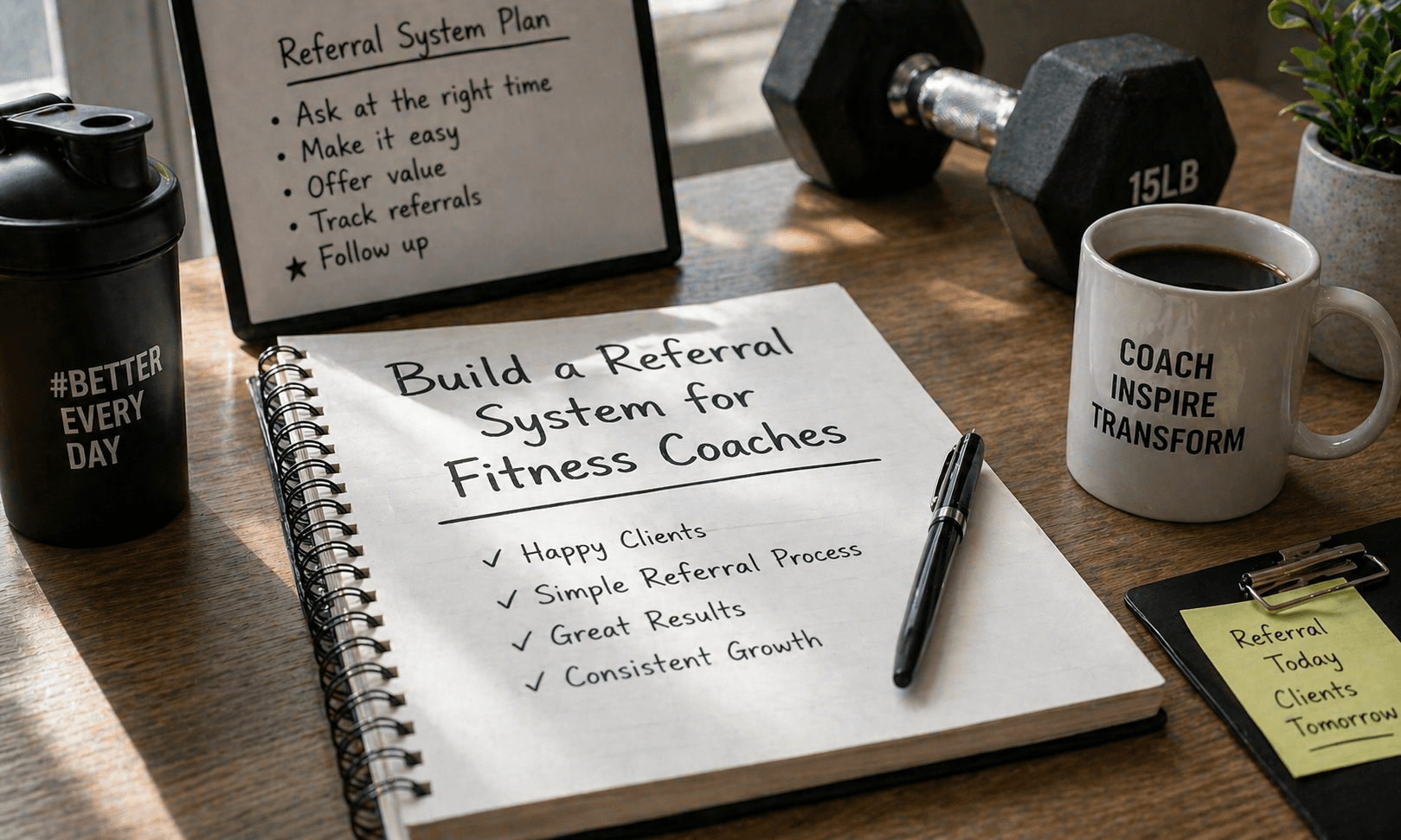
Build a Referral System for Fitness Coaches
Create a referral system for fitness coaching that drives consistent client growth through structured asks, simple rewards, and clear tracking without guesswork